Iran Space Agency announces new development projects
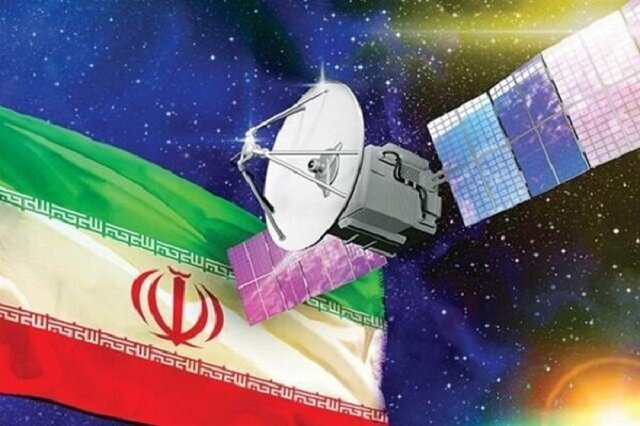
TEHRAN - A wide range of projects is currently underway by the Iran Space Agency, focusing on three main areas of infrastructure development, satellite design, and data and imagery-based services.
According to Hassan Salarieh, the head of the Iran Space Agency, satellite-based value-added services are among the agency’s top priorities, with the development of applications based on satellite data and imagery receiving significant attention.
Referring to the agency’s infrastructure initiatives, Salarieh said the projects were launched under Iran’s 10-year national space roadmap and the Seventh National Development Plan. They include the establishment of satellite control centers, expansion of launch facilities, and the construction of specialized satellite testing laboratories and environmental test centers, IRNA reported.
He noted that substantial progress had been achieved in these projects during the Iranian year 1404 (March 2025–March 2026), with several facilities entering operational service.
Salarieh added that efforts to expand the country’s space infrastructure are continuing in multiple areas, including specialized laboratories, the Chabahar Space Launch Base, and a nationwide network of satellite control centers.
"The satellite control centers are being developed as an integrated network across different regions of the country," he said. "This will improve the stability of communications with satellites while reducing the time required to establish contact."
He explained that the geographical distribution of control centers will shorten communication intervals with satellites, accelerate in-orbit testing procedures, and ultimately extend satellite operational lifetimes.
The ISA chief also announced plans to establish a network of mobile satellite ground stations, saying the initiative has been prioritized to ensure the continuous and reliable delivery of satellite data and imagery services nationwide.
He added that implementation of these projects will continue throughout the Iranian year 1405 (March 2026–March 2027), with several new facilities and infrastructure projects expected to be inaugurated in the coming months.
Addressing Iran’s satellite manufacturing program, Salarieh said numerous satellite projects that began in previous years remain under development.
He highlighted several major space launches carried out over the past year, including the launch of the Nahid-2 telecommunications satellite.
According to Salarieh, Nahid-2 is Iran’s first domestically developed telecommunications satellite, designed and built by the Iranian Space Research Center, which operates under the Ministry of Information and Communications Technology. He described the satellite as one of the country’s most significant achievements in the space sector.
He added that an upgraded version of Nahid-2 is currently under design and development at the Iranian Space Research Center. Although work on the new version began last year following the launch of Nahid-2, development activities are continuing at full pace during the current year.
Reviewing the satellite’s mission, Salarieh said Nahid-2, operating in low Earth orbit (LEO), completed its first operational tests last year, with most of the mission objectives successfully achieved.
"The valuable experience gained from the Nahid-2 mission has formed the basis for designing the next-generation satellite," he said.
The upgraded Nahid-2, he added, will feature enhanced technical capabilities and enable Iran to provide services through satellite constellations, making it one of the country's key strategic space projects.
Salarieh also announced progress on the Nahid-3 project, describing it as the next generation of Iran’s telecommunications satellites.
The satellite is currently in the design phase and is intended to provide communications services from geostationary orbit (GEO). Construction of several major subsystems, including propulsion systems and thrusters, is already underway.
Explaining the role of telecommunications satellites, Salarieh said their primary mission is data transmission, with service capacity determined by bandwidth and data throughput across various frequency bands.
He noted that telecommunications satellites operating in low Earth orbit generally require deployment in constellations to provide continuous coverage. By contrast, satellites in geostationary orbit can cover much larger areas, significantly reducing the number of satellites required.
Located approximately 36,000 kilometers above Earth, geostationary orbit allows a single satellite to provide communications services over a vast region. According to Salarieh, Nahid-3 is being designed specifically to take advantage of these capabilities.
Leave a Comment